
What is BIM Clash Detection?
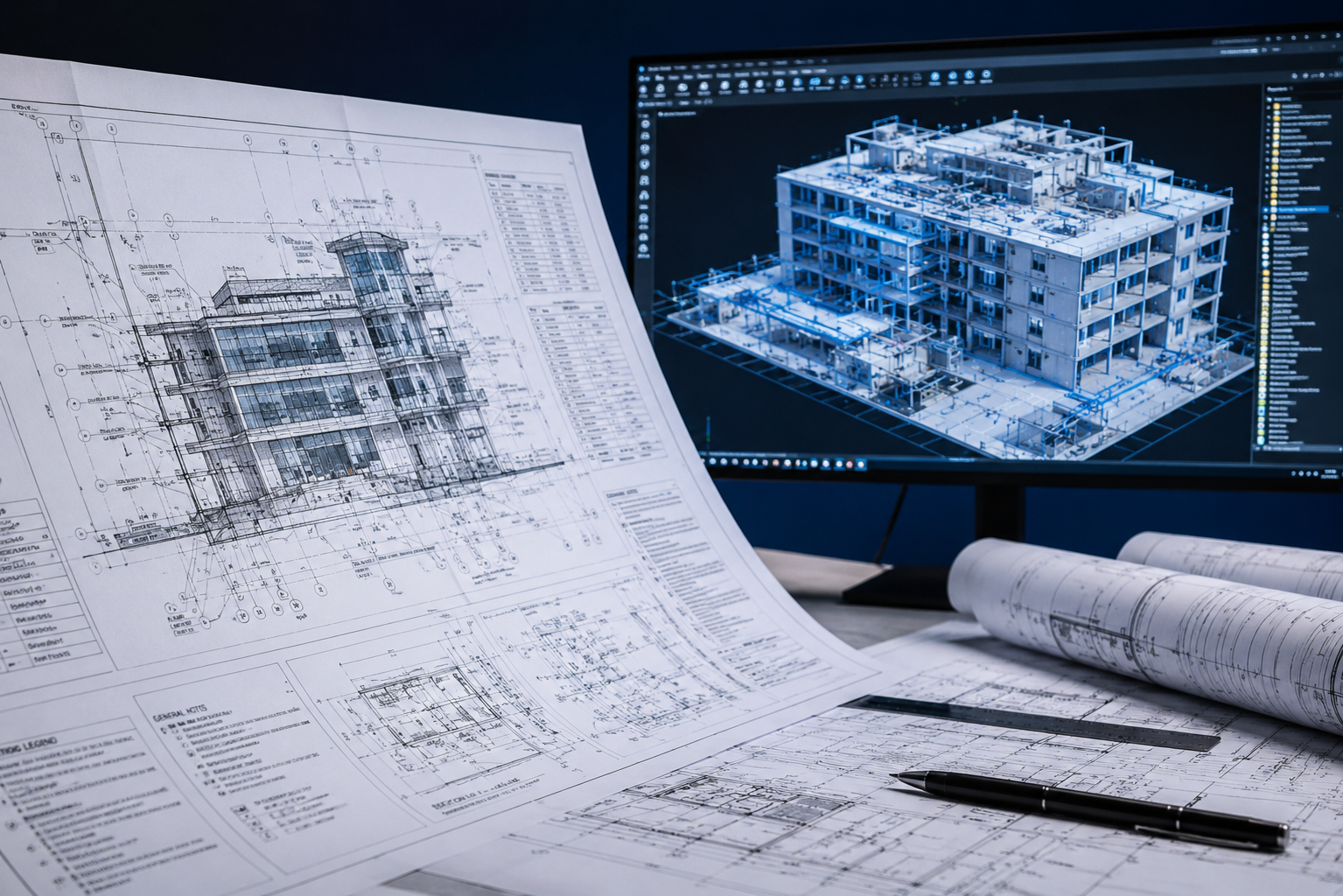
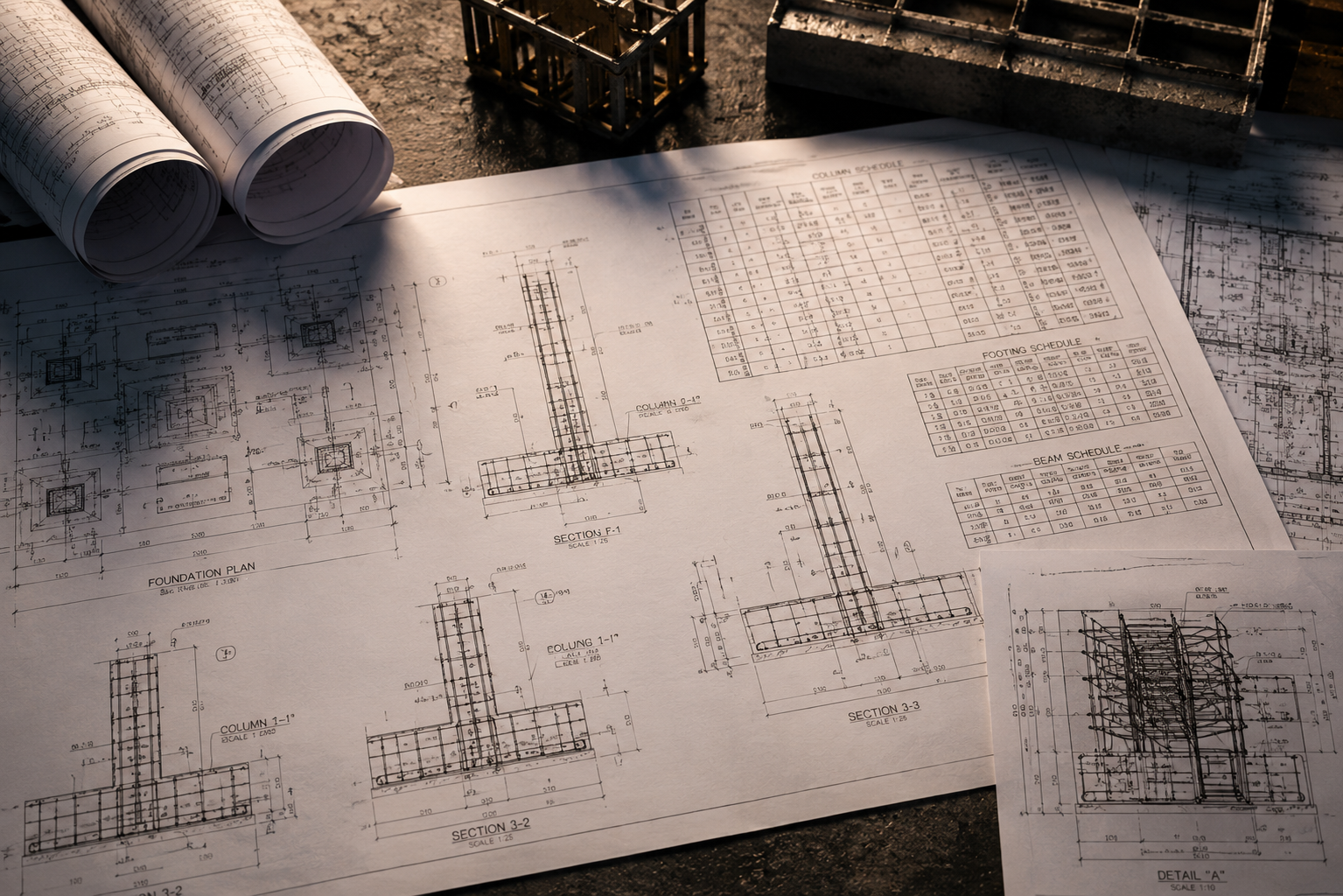
BIM clash detection is the automated process of identifying conflicts between building elements from different design disciplines by overlaying their 3D models in a single coordinated environment. In a traditional 2D drawing workflow, an HVAC duct shown on a mechanical drawing and a structural beam shown on a structural drawing might physically occupy the same space — and no one discovers the conflict until the contractor is on site trying to install both. In a BIM workflow, the conflict is identified computationally, before construction begins, and resolved at the design stage where correction costs a fraction of the field equivalent.
The most widely used platform for clash detection in professional engineering practice is Autodesk Navisworks Manage. Navisworks accepts model files from Revit (architecture, structure, MEP), AutoCAD, and a range of other design authoring tools, combines them into a single federated model, and runs configurable clash tests that flag every location where two elements physically intersect or violate a clearance rule. The output is a structured clash report — typically hundreds of items on a complex project — that the design team works through systematically to resolve each conflict before the information is released for construction.
Why Clashes Happen Without BIM
Understanding why clashes occur so frequently in conventionally coordinated projects helps explain why BIM clash detection is so valuable. The root cause is disciplinary isolation: architects, structural engineers, and MEP engineers each design their own systems in separate documents, with coordination happening through periodic drawing reviews and meetings rather than continuous model integration. Each discipline optimises its own system without full visibility of what the others are doing in three dimensions.
In practice, this means that an architect may design a corridor ceiling height of 2.8 metres above finished floor without knowing that the structural beam at that level is 600mm deep, the HVAC supply duct is 500mm wide, and there are fire suppression pipes running beneath the beam. The physical reality — when all elements are in the same space — is that they conflict, and the finished ceiling height is impossible to achieve. On a project with several hundred ceiling zones, dozens of plant rooms, and thousands of pipe and duct runs, the number of such conflicts in a non-BIM coordination process routinely runs into the hundreds. Most are discovered on site. Each one generates a variation order, a delay, and additional cost.
Types of Clashes: Hard, Soft, and Workflow
Navisworks clash detection distinguishes between three categories of conflict, each requiring a different resolution approach. Understanding the difference helps design teams prioritise their clash resolution effort.
Hard clashes are physical intersections — two solid elements that occupy exactly the same space. A pipe running through a structural beam is a hard clash. These are the most serious type and always require a design resolution before construction. Hard clashes caught in the model are straightforward to resolve; the same clash discovered on site after the beam is cast requires core drilling, structural analysis, and potentially a structural repair — at many times the design-stage cost.
Soft clashes are clearance violations — two elements that do not physically touch but are closer together than the required clearance for access, maintenance, insulation, or fire protection. A fire-rated duct running within 50mm of a sprinkler pipe may be a soft clash if the code requires a minimum 100mm separation. Soft clash tolerances are defined by the BIM coordinator based on the applicable engineering standards and client requirements.
Workflow clashes are sequencing conflicts identified by 4D BIM simulation — situations where two construction activities require the same physical space at the same time according to the construction programme, even though the finished elements do not conflict. These are resolved through programme adjustment rather than design change.
Physical intersections — two elements occupying the same space, such as a service pipe running through a structural beam or column.
Clearance violations — elements too close together for required insulation, maintenance access, or fire protection separation distances.
Construction sequencing conflicts identified through 4D simulation — two contractors requiring the same space at the same programme point.
Architecture, Structure, and MEP federated into a single Navisworks model — one source of truth for all coordination decisions.
The Clash Detection Workflow at First Step Engineering
At First Step Engineering, clash detection is not a one-time event at the end of the design process — it is an iterative workflow embedded throughout design development. We run the first coordination clash test at the end of schematic design, when the major structural and MEP systems are established but before detailed design investment has been made. This catches the largest, most expensive category of clashes — fundamental system conflicts — at the point where they are cheapest to resolve.
Subsequent clash detection rounds run at defined milestones through detailed design: typically at 50% and 90% design development, then again on the issued-for-construction model before the tender package is released. Each round produces a clash report in BCF (BIM Collaboration Format), which is shared with discipline leads through a tracked issue-management workflow. Every clash is assigned to a responsible discipline, given a resolution deadline, and signed off by the BIM coordinator when the model is updated. This creates an auditable record of every coordination decision made on the project — valuable both for client reporting and for any future dispute resolution.
"On a typical G+5 commercial project in Muscat, our BIM clash detection process identifies an average of 140–300 conflicts before a single wall is built — each one a potential site variation order eliminated."
Real-World Impact: Cost Savings in Oman Projects
The financial case for BIM clash detection is well-documented globally, and our own project data from Muscat confirms the pattern. Variation orders related to design coordination conflicts — services clashing with structure, insufficient ceiling void for MEP, service shaft sizes inadequate for the required duct runs — represent one of the top three variation order categories on projects delivered without BIM coordination in the Oman market. Each variation order carries not just the direct cost of the field fix but the programme impact of the delay it creates downstream.
On a typical G+5 commercial project of approximately 5,000 square metres in Muscat, our BIM coordination process identifies between 140 and 300 clashes before the issued-for-construction set is released. The cost of resolving those clashes at design stage — typically a few hours of BIM coordination time per clash — is a fraction of what the same resolution would cost on site, where it involves labour mobilisation, material waste, cutting and patching, and potential structural assessment. A conservative estimate of the saving, based on industry benchmark variation order costs, is 3–8% of the construction contract value. On a project of OMR 500,000 construction value, that is OMR 15,000–40,000 in variation orders eliminated — for a BIM coordination fee that is typically well below that figure.
How Clash Detection Affects Your Timeline
The schedule impact of BIM coordination is twofold. First, and most obviously, eliminating coordination clashes before construction eliminates the site delays that field variation orders cause. A single clash in a main plant room — say, a chilled water riser conflicting with a structural column in a location that requires rerouting 40 metres of pipe — can add three to four weeks to the MEP installation programme on a mid-size project. Multiply this across dozens of unresolved clashes and you have months of programme slippage, which in Oman's market often triggers liquidated damage provisions in the main contract.
The second, less obvious schedule benefit is that BIM-coordinated design packages are faster through the authority submission and approval process. Reviewers from the Municipality, OPAL, and fire authority who receive coordinated 3D models alongside conventional 2D drawings can review the building's compliance more efficiently and with greater confidence than reviewers working from uncoordinated 2D packages. Several clients have reported measurably shorter approval cycles on BIM-submitted packages compared to equivalent non-BIM projects submitted through the same authority offices.
Getting Started with BIM Coordination
If you are planning a project in Oman and want to understand how BIM clash detection fits into your design and construction programme, the most important step is to engage a BIM-capable consultancy at the earliest possible stage — ideally at concept design, certainly before the structural system is fixed and before MEP system selection is finalised. Retrofitting BIM coordination onto an already-advanced design costs significantly more than embedding it from the start, and the clash savings at concept stage are typically the largest of any design phase.
At First Step Engineering, our BIM team uses Autodesk Revit for all design authoring across architecture, structure, and MEP, with Navisworks Manage for federated model coordination and clash detection. We provide clients with regular coordination status reports, clash count summaries, and model walkthroughs at each milestone so you always know where coordination stands. If your project has already been designed in 2D and you are approaching the tender stage, we can also provide a standalone BIM coordination review service — importing existing drawings into a 3D environment and running a clash detection pass before the construction package is released. Contact us to discuss the right level of BIM engagement for your project.